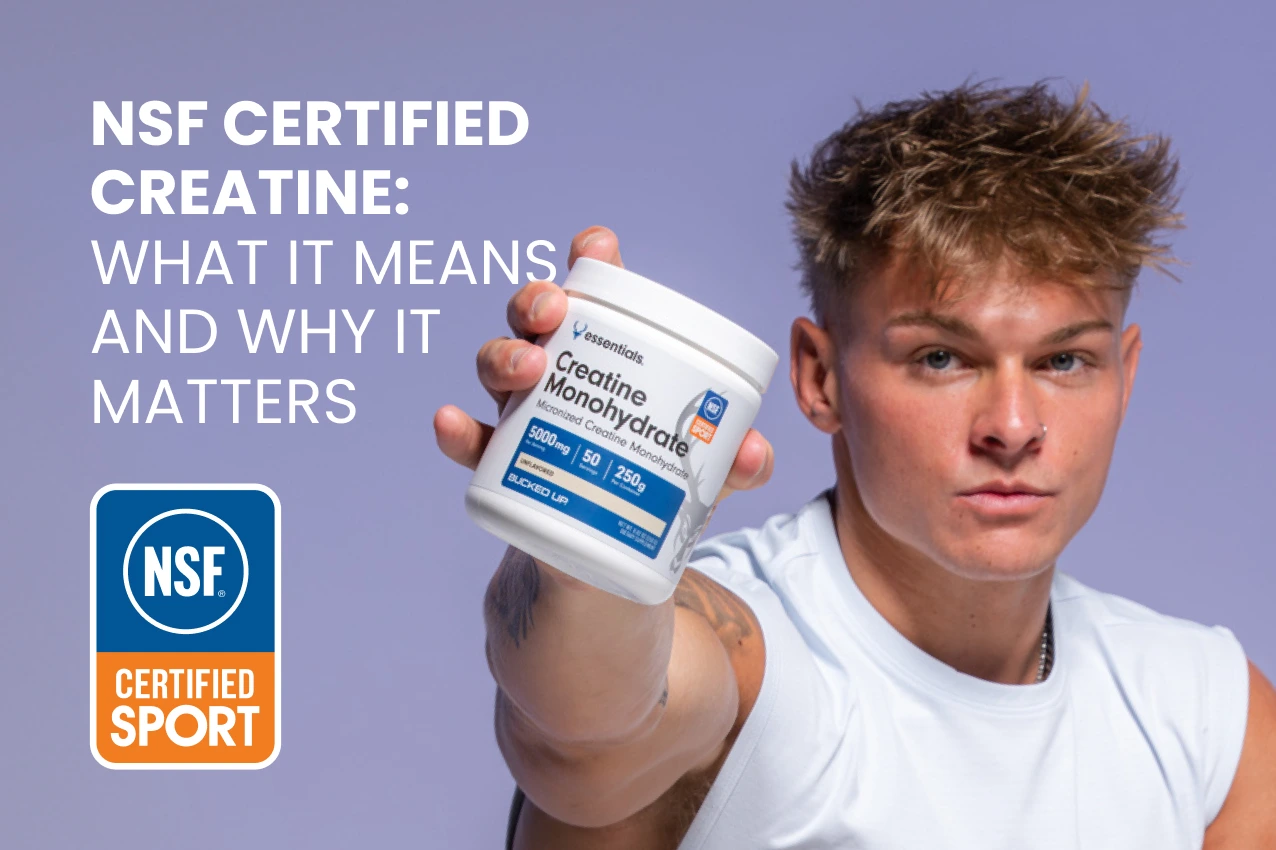
NSF Certified creatine is creatine that an independent third-party program has tested to confirm the label matches what’s inside. The testing checks for quality, contaminants, and banned substances, so you know the product meets set standards for purity and safety.
The certification gives users added assurance that a product label is accurate, beyond what brand identity alone can promise.
NSF certification is different from clinical trials, which establish whether creatine works safely and effectively. Certification confirms what’s in the product; trials confirm what it does.
Certification confirms what’s in the product; trials confirm what it does.
Here’s a closer look at what the certification means, who it matters most for, and how to spot it when you shop.
What does “NSF certified” creatine actually mean?
When a product carries the label “NSF Certified,” NSF has tested it against safety standards the organization develops. NSF, formerly the National Sanitation Foundation, is an independent nonprofit founded in 1944 in the United States. It sets standards for food, water, consumer products, and other high-stakes industries.
Is NSF certified creatine safe for drug-tested athletes?
Drug-tested athletes should look for the NSF Certified for Sport badge. This certification screens for over 290 substances banned by groups like the NCAA, MLB, NFL, and Olympic anti-doping programs.
Does NSF certification mean a product is FDA approved?
NSF certification is not the same as FDA approval. NSF Certified creatine, for example, cannot be “FDA approved.” Unlike drugs approved for safety and effectiveness, dietary supplements aren’t reviewed by the FDA before they reach the market.
Instead, the FDA regulates the manufacturing process. It requires facilities to follow Current Good Manufacturing Practices (cGMP). These are standards for quality control, sanitation, and accurate labeling. The FDA enforces them through periodic facility inspections, not product-by-product review.
That means a product can be both NSF Certified and FDA compliant. NSF certification is an extra, voluntary layer of third-party testing.
Why isn’t all creatine NSF certified?
NSF certification for creatine supplements takes money and time. Even top brands often skip this step. They rely on brand recognition and consumer trust, not a formal “banned substances” guarantee.
Trusted brands also often follow FDA cGMP standards even without paying for NSF testing. Skipping NSF certification is a business or cost decision, not necessarily a signal that a product is unsafe.
What to look for when buying NSF certified creatine
The most reliable way to confirm a certification is real is to check it directly, not just take the label’s word for it.
How to verify a certification is real:
- Search NSF’s Certified for Sport database or app by product name, brand, or lot number
- Look for the actual NSF mark or badge on the label
- Watch for fake badges, if it’s not in the database, it’s not certified, no matter what the label says
- Check NSF’s public notices page for companies that have broken certification rules
Bucked Up’s NSF certified for sport creatine
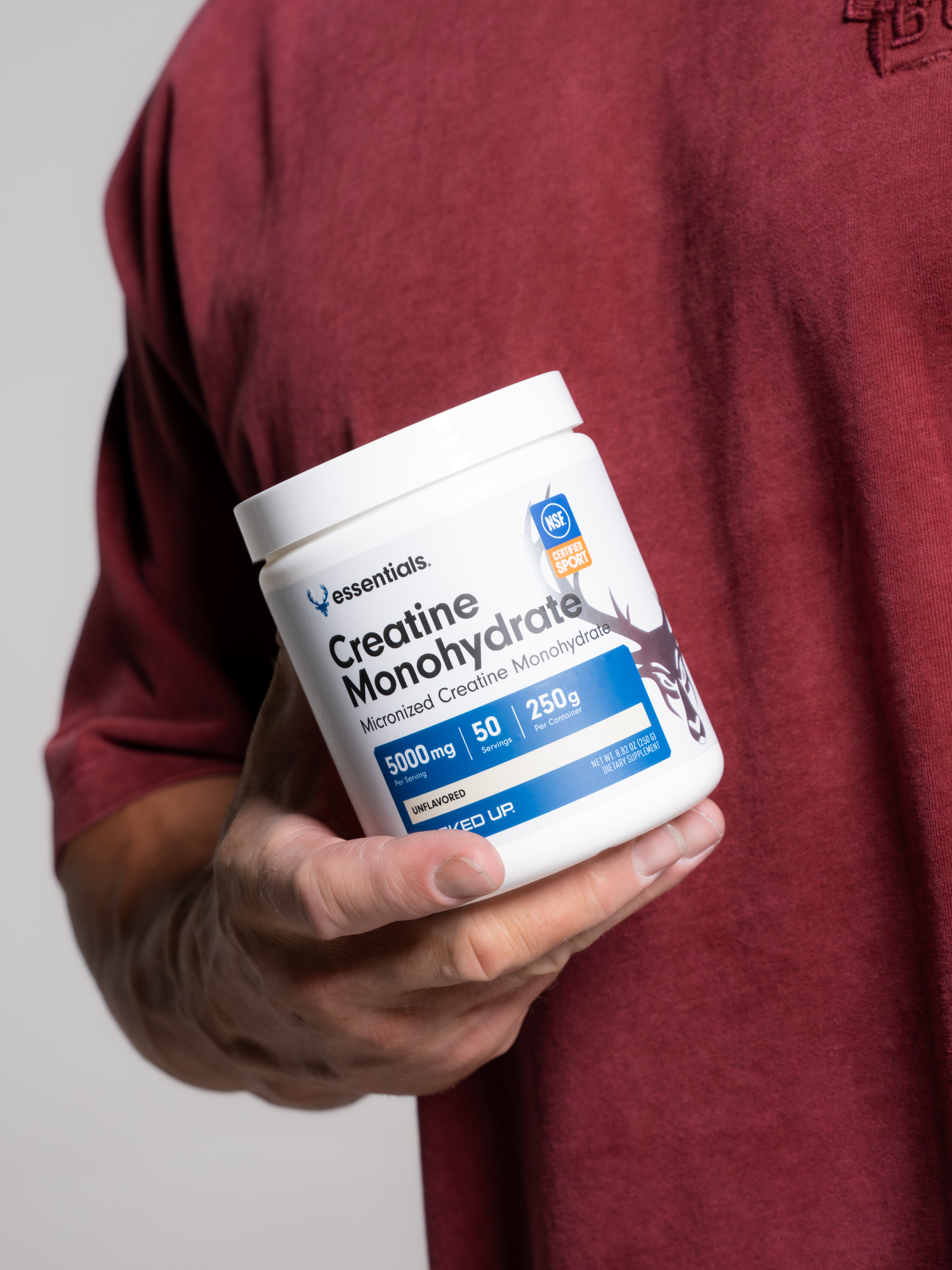
Bucked Up Creatine Monohydrate (unflavored) is NSF Certified for Sport, verified by an independent lab for manufacturing contaminants like heavy metals, along with the same 290+ substance screening required for the certification overall.
And don’t worry, we’re not just saying that — check Bucked Up’s receipts in NSF’s database.
FAQ
How can I tell if an NSF certification mark is actually real?
Look for the NSF Certified for Sport logo on the product label. Then check NSF’s certified-product database to confirm the product appears there. Also watch out for vague phrases like “NSF tested” or “lab verified” without the actual NSF mark.
Does NSF certification on creatine expire, or is it a one-time approval?
NSF certification is ongoing. A single test doesn’t guarantee certification over the long term. Products need ongoing batch testing and regular review to keep the certification active.
Is NSF Certified for Sport creatine the same as USP Verified or Informed Sport creatine?
No. NSF Certified for Sport, USP Verified, and Informed Sport are separate product certifications. Each one has its own testing rules.
Still, all three aim to confirm label accuracy and screen for contaminants and banned substances. A product may carry one or several of these certifications.
Does NSF certification tell you anything about whether creatine actually works?
No. NSF certification only verifies purity and label accuracy, not effectiveness, dose adequacy, or potential side effects.
Why does NSF certified creatine sometimes cost more than uncertified options?
Maintaining an NSF certification requires ongoing batch testing and facility audits, which adds cost, therefore often increasing pricing.
The Food and Drug Administration has not evaluated these statements. This product does not diagnose, treat, cure, or prevent any disease.

Leave a Reply