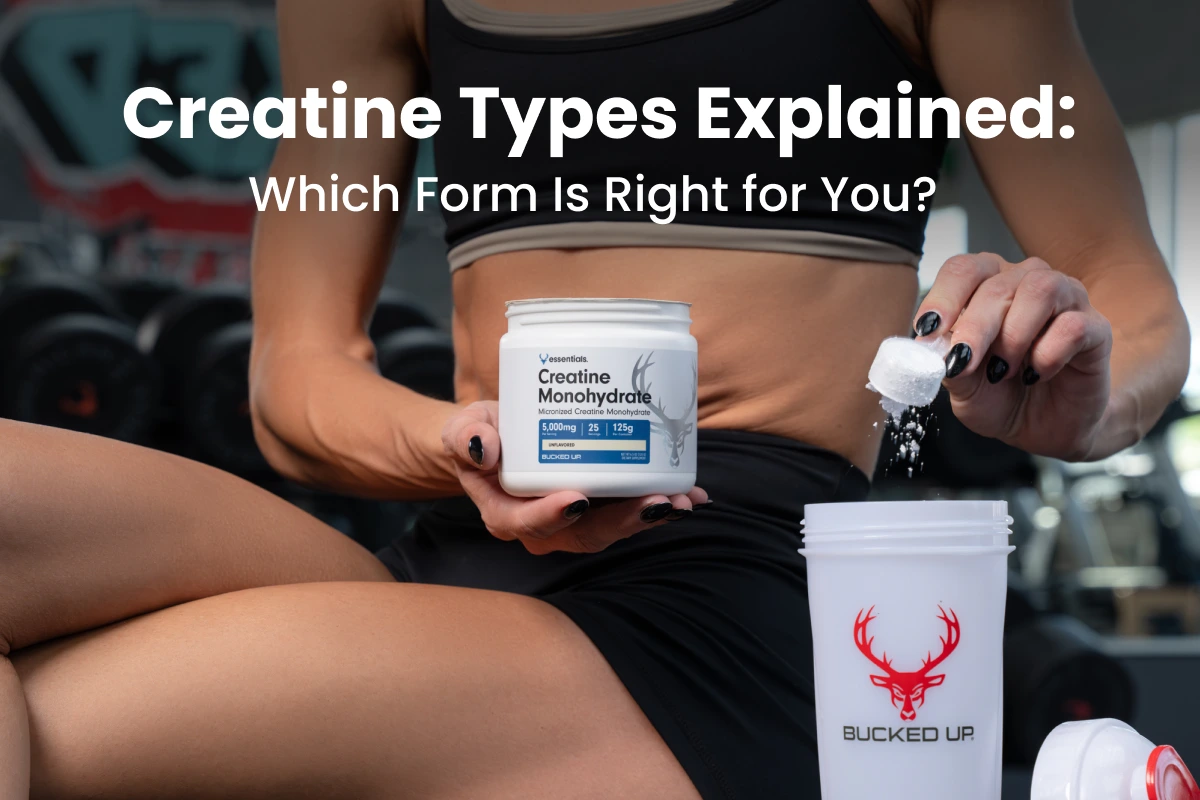

If you’ve spent any time in the supplement aisle (or scrolling supplement sites at 11pm), you’ve probably noticed creatine doesn’t come in just one form. Monohydrate, HCl, blends, gummies — the options can get confusing fast. So let’s break down what actually separates these forms, and how to figure out which one fits your goals.
Quick Refresher: What Creatine Actually Does
Creatine is a compound your body already makes and stores in muscle tissue, where it helps generate energy for short bursts of intense effort.* Supplementing supports your muscle’s phosphocreatine reserves, which supports faster ATP production — the fuel your muscles burn during heavy lifts, sprints, and other high-output movement.*
Beyond the gym, creatine also plays a role in brain energy metabolism, and some research points to benefits supporting memory and mental sharpness, plus support for muscle maintenance as we age.*
With that foundation in place, here’s where things get interesting: not all creatine is created equal in how it’s processed, absorbed, or tolerated.
The Main Types of Creatine

1. Creatine Monohydrate
This is the original and still the gold standard. It’s the most studied form of creatine on the market, with decades of research backing its effectiveness for supporting strength, muscle growth, and performance.* It’s also usually the most budget-friendly option gram for gram. Bucked Up’s version is micronized — processed into finer particles for better solubility and mixing — so you get the proven benefits of monohydrate without the grittiness some powders are known for.* If you’re new to creatine or just want the most proven option, monohydrate is the safe default.
2. Creatine HCl (Hydrochloride)
Creatine HCl is bonded to a hydrochloride group, which makes it more water-soluble than standard monohydrate. Because it dissolves more readily, some people find it easier on the stomach, with less bloating or GI discomfort — a common complaint with higher doses of monohydrate. It’s often available in capsule form, which also makes dosing simple if you’re not a fan of mixing powders.
3. Creatine Blends
Rather than picking one form, blends combine several types of creatine into a single product, aiming to cover multiple bases — solubility, absorption, and performance support — in one scoop or capsule.* These are a good fit if you like the idea of hedging your bets across different creatine sources without having to buy and mix several products yourself.
4. Creatine Gummies & Candy
Not everyone wants to mix a powder or swallow capsules, and that’s where creatine gummies and candy come in. These take creatine monohydrate and put it into a chewable, ready-to-go format — no water, no shaker bottle, no capsule count. It’s the same core supplement, just built for convenience and taste. This format tends to appeal to people who dislike the texture of creatine powder, travel often, or simply want a grab-and-go option that feels less like “taking a supplement” and more like a treat.
So Which One Should You Take?
There’s no universally “best” form — it really comes down to your priorities:
- Want the most research-backed, budget-friendly option? Go with monohydrate (Bucked Up’s is micronized for easy mixing).
- Had issues with bloating or stomach discomfort in the past? Try HCl.
- Want a bit of everything in one product? A blend covers multiple forms at once.
- Hate mixing powder or swallowing capsules? Reach for creatine gummies or candy instead.
Dosage and Timing, Regardless of Type
The form you choose changes how it’s processed and tolerated, but the basic dosing guidance stays consistent across types:
- 3–5 grams daily is the standard effective range for most people.*
- Consistency matters more than timing — taking it at the same time each day is more important than taking it at a specific time.
- Some research suggests post-workout dosing may offer a slight edge for lean mass and strength gains.*
- Pairing your dose with a carbohydrate source may help enhance uptake into muscle.*
- Staying well-hydrated is important any time you’re supplementing with creatine.
Give it time — most people don’t notice the full effects for a few weeks of consistent use.*
Bucked Up’s Creatine Lineup
If you’re ready to pick a form, Bucked Up offers options across the board:
- Creatine Monohydrate — pure, micronized monohydrate powder for anyone who wants the most researched form in an easy-to-mix format.
- Creatine HCl Capsules / Babe Creatine — convenient capsules built around the more soluble HCl form, for those who want simple dosing or have had bloating issues with monohydrate.
- Six Point Creatine — a blend of six different creatine types for a more comprehensive approach.
- Buck Build Creatine & Glutamine — combines creatine with glutamine to support muscle growth and recovery together.
- Creatine Gummies & Candy — a chewable, on-the-go way to get your daily creatine without powder or capsules, great for anyone who wants convenience without sacrificing consistency.
- Black Ant — primarily a pre-workout, but it’s worth a mention here since it also carries a dose of creatine, making it an option if you want your pre-workout and creatine dialed in together in one product.

Bottom Line
All roads with creatine lead to the same general destination — more phosphocreatine in your muscles, better ATP availability, and support for strength and recovery.* The type you choose is really about how it fits your digestion, your routine, and your preferences for capsules versus powder. Start with what matches your priorities, stay consistent, and give it time to work.
*These statements have not been evaluated by the Food and Drug Administration. This product is not intended to diagnose, treat, cure, or prevent any disease. Individual results may vary. Consult with a medical professional before making changes to your diet, health, or exercise routine.


Leave a Reply